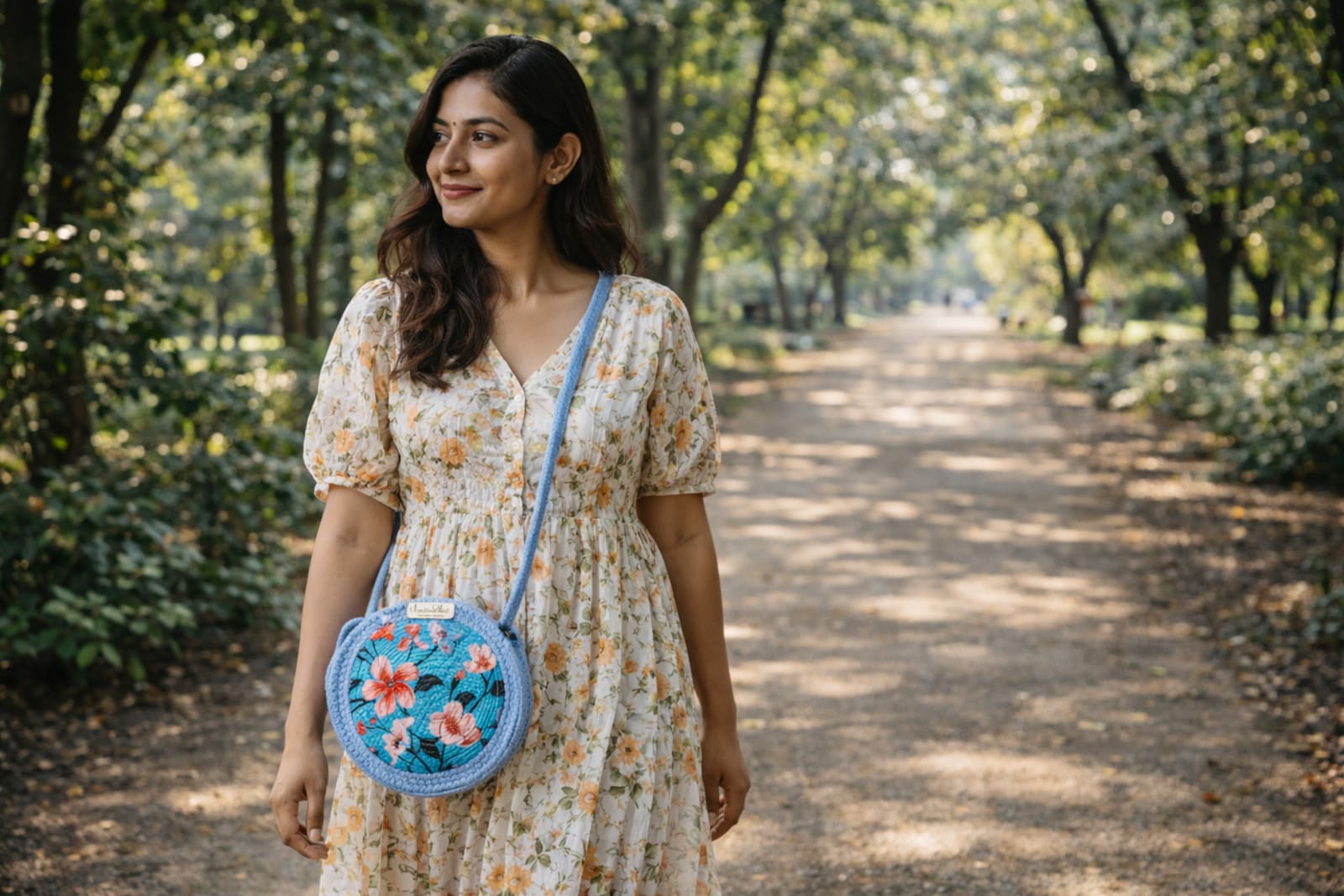
Why Women Are Falling Back in Love With Natural Fabrics
Sneha Patel
Fashion & Lifestyle Writer
Remember when everything was polyester? When clothes felt slick and smooth and... well, plastic? When we thought synthetic was better because it was "easy care" and "wrinkle-free" and "modern"?
We were wrong. And we're finally realizing it.
Across India, women are falling back in love with natural fabrics. Cotton, jute, linen, silk—fibers that breathe, that feel real, that come from the earth. It's not a trend. It's a return. A coming home.
I started noticing it in small ways. My friend Ritu started choosing cotton over polyester for her everyday wear. "My skin can finally breathe," she said. My colleague Ananya switched to jute bags instead of synthetic ones. "They just feel better," she explained. My neighbor started buying only natural fabrics for her children. "I want them to know what real fabric feels like," she told me.
It's happening everywhere. In conversations. In choices. In a slow but steady shift away from synthetic and back to natural.
But why? What's driving this return?
For many women, it started with comfort. Real comfort. The kind that comes from fabrics that breathe. That don't trap heat. That feel good against your skin, not like you're wrapped in plastic.
I remember the first time I wore a jute bag instead of a synthetic one. The difference was immediate. It felt lighter, softer, more natural. It didn't stick to my skin on hot days. It didn't feel slippery or artificial. It just felt right.
That feeling of "rightness" is hard to explain, but once you experience it, you can't go back. There's something deeply satisfying about natural fabrics. They feel honest. Real. Like they belong.
But comfort is just the beginning. For many women, the shift to natural fabrics is also about health. Awareness is growing about the chemicals used in synthetic fabrics, about microplastics, about the impact on our skin and our environment.
My friend Dr. Meera, a dermatologist, started recommending natural fabrics to her patients. "Many skin issues are caused or aggravated by synthetic fabrics," she explained. "Natural fabrics are gentler. They breathe. They're better for our skin."
Then there's the environmental aspect. Natural fabrics come from renewable sources. They biodegrade. They don't fill our landfills with plastic that will take hundreds of years to break down. When you choose natural, you're choosing better for the planet.
But perhaps the most powerful reason is simply beauty. Natural fabrics have a beauty that synthetics can't replicate. The texture of jute. The softness of cotton. The drape of linen. The luster of silk. They have depth, character, life.
Synthetic fabrics try to imitate natural ones, but they can't quite capture that essence. That natural variation. That organic beauty. Natural fabrics don't need to pretend to be something they're not—they're beautiful just as they are.
There's also the nostalgia factor. Many women are remembering the fabrics their mothers and grandmothers used. The cotton sarees, the jute bags, the natural fibers that were part of daily life. There's a comfort in returning to what feels familiar, what feels traditional, what feels like home.
My grandmother always used natural fabrics. She had a collection of cotton sarees, jute bags, linen napkins. I used to think they were old-fashioned. But now I realize—she was ahead of her time. She understood what we're only now rediscovering.
The shift to natural fabrics isn't just about individual choices. It's part of a larger movement toward mindful living. Toward choosing things that are real, that are good for us, that are good for the planet.
But it's not always easy. Natural fabrics can cost more. They can require more care. They can wrinkle, fade, or need special handling. But here's the thing: the "inconvenience" is part of the appeal.
When something requires care, it becomes precious. When something takes effort, we value it more. When something isn't disposable, we treat it differently.
Natural fabrics teach us patience. They teach us care. They remind us that good things take time, that quality matters, that we should slow down.
I've noticed that since I started choosing natural fabrics, I've become more mindful about my purchases. I buy less, but I buy better. I take care of what I have. I appreciate the things I own.
There's something beautiful about that shift. From accumulation to curation. From quantity to quality. From convenience to care.
The return to natural fabrics is also a return to craftsmanship. Natural fabrics often come from artisans, from people who understand the material, who know how to work with it, who create with care.
When you buy a jute bag made by hand, you're not just buying a bag. You're buying into a craft. You're supporting someone who understands the material, who knows how to bring out its beauty, who creates with skill and care.
That human element matters. In a world of machines and mass production, there's something deeply satisfying about owning something made by human hands, from natural materials, with care and skill.
The shift isn't happening overnight. It's gradual. Quiet. But it's steady. More and more women are making the choice. More conversations are happening. More awareness is growing.
And as more women choose natural fabrics, as more stories are shared, as more people experience the difference, the movement will only grow stronger.
The return to natural fabrics isn't about rejecting modernity. It's about finding balance. About choosing what's good for us, what's good for the planet, what feels right.
It's about remembering that sometimes, the old ways are the best ways. That natural is beautiful. That real is better than artificial. That what comes from the earth belongs on our bodies, in our homes, in our lives.
So here's to natural fabrics. To cotton and jute, linen and silk. To fabrics that breathe, that feel real, that come from the earth. To the women choosing them. To the return. To coming home.
Because sometimes, the best way forward is to look back. To remember what we knew all along. To fall in love again with what was always beautiful, always right, always real.
And that? That's worth celebrating.
Love the story? Explore TheTidbit’s signature handmade jute bags — each crafted with the same care.
More Stories

The Future of Corporate Merchandise: Why Top Brands are Switching to Sustainable Jute Bags
Looking for premium, eco-friendly corporate gifting in Bangalore or across India? Get customized, handcrafted bulk jute bags with your company branding.
5 Aesthetic Office Tote Bags That Will Survive Your Daily Metro Commute
Looking for durable, aesthetic office tote bags in Delhi-NCR, Mumbai, or Pune? Discover handcrafted, spacious jute tote bags with rope handles perfect for work.

College Fashion on a Budget: 5 Trendy Sling Bags Under ₹500
Looking for the perfect college bags for girls in Delhi-NCR, Lucknow, or Mumbai? Check out these trendy, affordable, handcrafted jute sling bags under ₹500.